
Show summary Hide summary
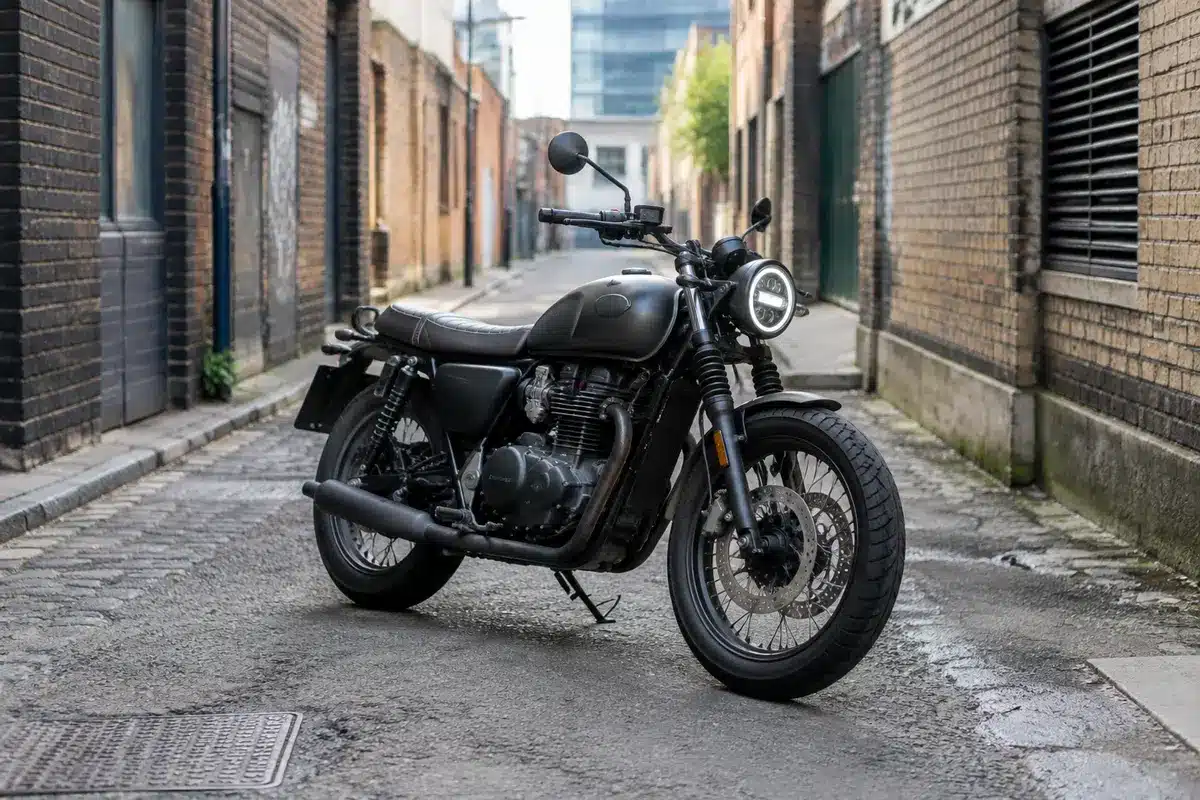
The reborn BSA Bantam 350 has quickly become a sales hit in the U.K., topping modern-classic registrations in October and November, according to the Motorcycle Industry Association. Yet after a fresh two-week test I found a machine that is as much defined by its price and practicality as by awkward build choices that betray the famous name on its tank.
Heritage, ownership and launch
The BSA story reaches back to the 19th century, when the Birmingham Small Arms Company first diversified into motorcycles in 1910. The original firm collapsed in the early 1970s, and the marque changed hands repeatedly before India’s Mahindra Group acquired the BSA name in 2016.
Triumph Bonneville T40: 398cc single-cylinder powers the 2027 T40
Bikernet releases pre-rally weekly newsletter dated July 23, 2026

Under Mahindra, BSA returned with retro models: the Gold Star 650 arrived in 2021, and the Bantam 350 debuted in July 2025 alongside a Scrambler 650. The Bantam is built around a single-cylinder powerplant of roughly 334cc and is priced in the U.K. at about £3,499.
First impressions that didn’t shift
On first ride the Bantam felt authentic in tone but rough at the edges. The package is keenly priced, and that shows in visible ways: cheap plastics, inexpensive fasteners and decals that lack refinement.
Some control elements frustrated me early on and remained an annoyance. Certain left-hand switch functions felt superfluous, and the suspension and tires betray the bike’s budget intent. Despite those flaws, a few qualities stood out immediately — notably a deep, characterful exhaust note and a comfortable, low seat that encourages everyday use.
Standout positives and negatives
- Pros: strong sound, easy to ride, affordable.
- Cons: noticeable plastic trim, budget suspension, a product that doesn’t always match the historic image BSA promotes.
A different view after more miles
Returning to the Bantam for an extended period changed my perspective. A short, unplanned ride in lightweight clothing — no heavy jacket or usual protective extras — revealed a simpler pleasure. Freed of modern motorcycle accoutrements, the bike delivered a raw, immediate connection that felt oddly honest.
That simplicity can be an asset. In the right setting, its lack of finesse reads as character rather than compromise. But that quality depends entirely on how the rider approaches the machine.
Where it shines — and where it struggles
Country lanes
The Bantam is ideally suited to tight, rural roads. Low seat height and modest mass make it nimble on narrow lanes where larger machines feel cumbersome. At slow speeds its engine offers a cheerful, throaty soundtrack that tends to elicit friendly waves from passersby.

City use
In urban traffic the bike’s compactness and light clutch make it agile and easy to place among lanes of cars. Visibility from the mirrors is good, and the upright ergonomics help in stop-start conditions. However, the gearbox can feel vague at the extremes: attempts to click down from first or up from top gear sometimes lack the reassuring resistance found on most transmissions.
Motorway
On a long straight I reached around 80 mph — not blistering, but sufficient for steady cruising. The experience at that speed was exhilarating in bursts; prolonged high-speed riding, especially on poor surfaces, exposes the limits of the suspension and the bike’s composure.
How to think about the Bantam 350
The Bantam 350 is not a lifelong heirloom. It is, more plainly, an affordable, usable motorcycle: a commuter, a nimble town bike and an enjoyable companion for short country runs. If you judge it against storied British brands and expect premium fit-and-finish, you will likely be disappointed.
It also sits in a crowded segment. Competitors such as the Honda GB350S, Royal Enfield Bullet 350 and value models like the Zontes ZT350 offer different mixes of quality, price and appeal. In India the Bantam platform exists under other badges — the Jawa 42 FJ among them — which underlines that this is a cost-driven, global product rather than a bespoke revival of classic BSA craftsmanship.
Ultimately, whether the Bantam works for you depends on expectations. Seen as a simple, well-priced runabout with a pleasing engine note, it’s a likeable and practical machine. Seen through the prism of BSA’s historic cachet, it falls short of the promise implied by that name.