Show summary Hide summary
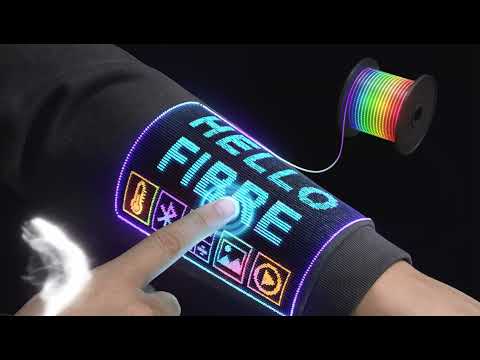
Researchers at the National University of Singapore have developed fabric that doubles as an interactive screen, embedding long, flexible electronic fibers that act as both pixels and sensors. The textile prototype can show video, react to touch and voice, and measure wearer temperature—functionality normally reserved for phones or smartwatches.
How a thread becomes a display
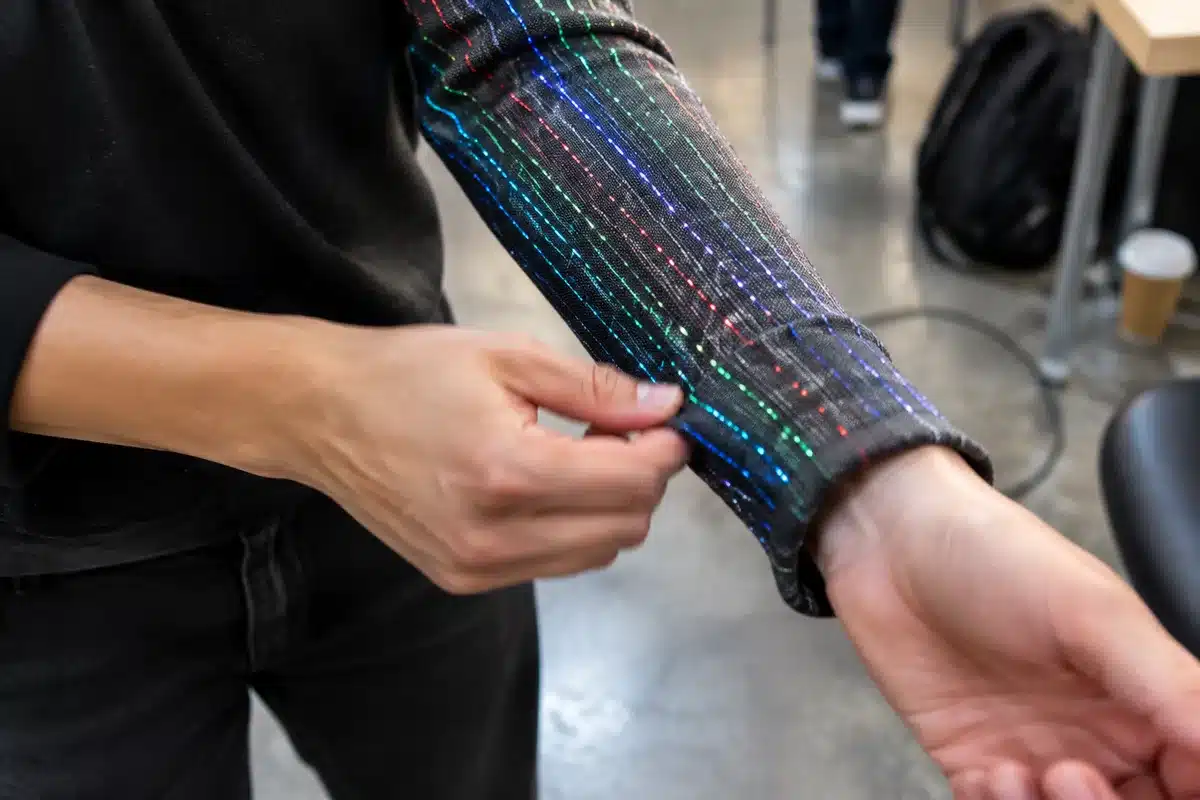
The core innovation is a row of what the team calls digital pixel fibers: 1-millimeter-thick polymer threads, each about 10 meters long, containing miniature RGB LED chips, ultra-thin electrical conductors, and a touch-sensitive layer. The LEDs serve as individual pixels while internal copper traces carry power and data along the length of the fiber.
Triumph Bonneville T40: 398cc single-cylinder powers the 2027 T40
Bikernet releases pre-rally weekly newsletter dated July 23, 2026

To assemble these fibers, the researchers aligned thousands of tiny LED chips and routed multiple insulated wires beside them. A programmable laser exposes connection points on the wires, which are then soldered to the LEDs. That pre-assembled strip is pulled into a softened polymer using a thermal drawing technique, producing a thin, transparent, and stretchable thread that traps the electronics inside.
Prototype sleeve and its capabilities
For a proof of concept, the team wove 54 of the electronic fibers into the forearm section of a garment sleeve. Each fiber contains 96 individually addressable LEDs, creating a display with a total of 96 × 54 pixels. The resulting screen measures roughly 168 × 105 mm and runs at 30 frames per second with 8‑bit color depth—enough to render simple images, animations, and basic graphical interfaces.

Beyond the lighting elements, the garment also incorporates fibers that function as a microphone, a speaker, motion sensors, a magnetometer, an ambient light sensor, and a temperature sensor. Together, these components let the sleeve play videos with sound, accept voice commands, rotate its display in response to orientation, and show the wearer’s body temperature on the fabric itself.
Sensors and embedded electronics
- Microphone and speaker for audio input/output
- Motion sensors for movement and orientation tracking
- Magnetometer for compass-like functions
- Temperature and ambient-light sensors for health and display adjustments
The manufacturing approach ties together a large number of tiny components: the team reports integrating more than 5,000 electronic chips and over 20,000 electrical connections while preserving the textile’s flexibility and breathability.
Durability, limits, and next steps
Durability tests showed the electronic fabric survives 50 machine washes and 1,000 bending cycles without major loss in display or touch performance. That resilience is a notable step toward practical wearables.
Still, the fibers are relatively thick at 1 mm and the display’s resolution is low compared with modern consumer screens. The researchers say they are working on reducing component size and producing thinner fibers to raise pixel density. They also plan to add more advanced sensors and on-device AI to enable smarter, context-aware garments.
Potential applications
If refined, this textile platform could enable clothing that presents notifications and navigation, tracks health metrics, or displays safety information to workers without the need to handle a separate device. Sportswear could show real-time performance data on the sleeve, while clinical garments might let users and caregivers monitor vitals directly on fabric.
The project and its methods are detailed in the journal Nature and were developed by researchers at the National University of Singapore.