Show summary Hide summary
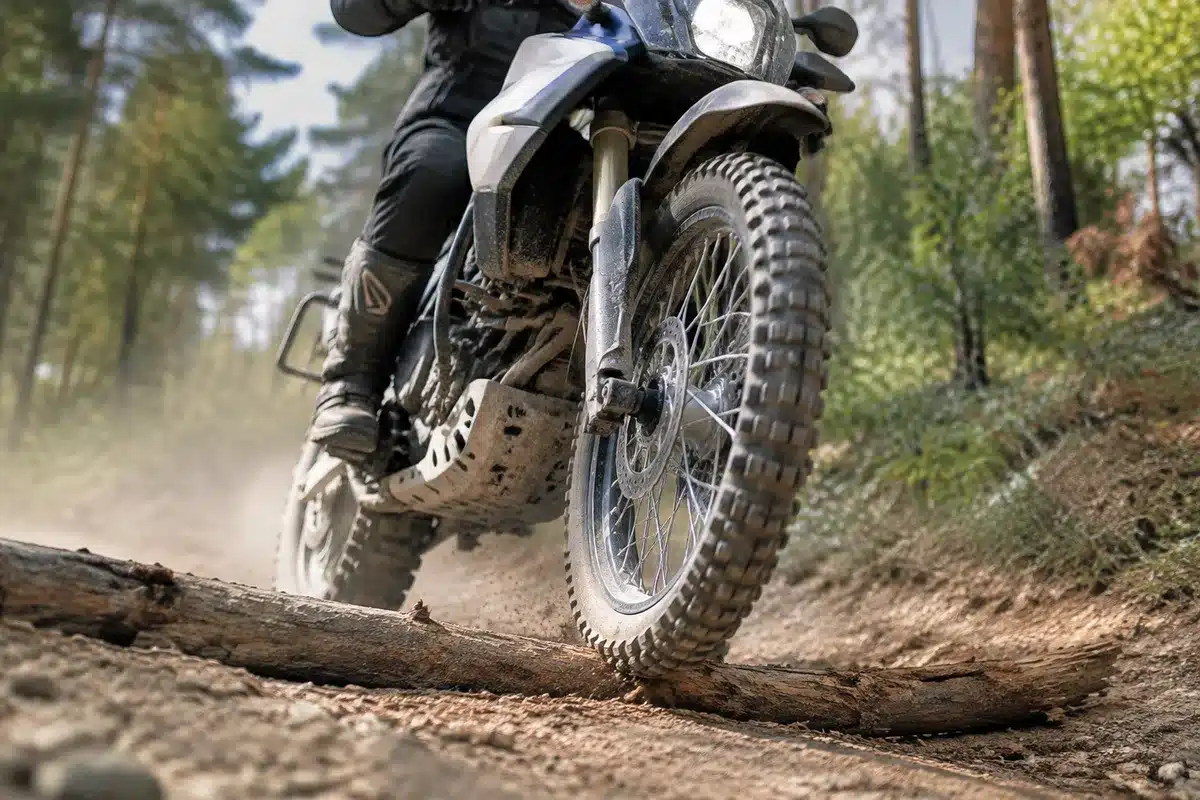
A fallen tree on a narrow dirt track in Goa became the moment the 2026 Royal Enfield Himalayan 450 Mana Black stopped being a brochure promise and started to feel dependable. After several days riding the new model in India, the bike’s composure and practicality stood out as much as its styling updates.
How it handled a surprise obstacle
On a lunchtime detour through light forest, the front 21-inch wheel met a small trunk and simply rolled over. There was no dramatic pitching forward, no drama from the handling. The suspension — Royal Enfield’s non-adjustable Showa forks up front — soaked the impact and the rear 17-inch followed without fuss.
Triumph Bonneville T40: 398cc single-cylinder powers the 2027 T40
Bikernet releases pre-rally weekly newsletter dated July 23, 2026
That quick, uneventful recovery convinced the rider that the Himalayan 450 can do the everyday off-road duties Royal Enfield promises. It isn’t an enduro weapon, but it’s robust enough for most dirt tracks, lanes and rough roads owners will find themselves on.
What’s changed for the Mana Black
The Mana Black keeps the mechanical core of the Himalayan 450 intact but alters key bits of hardware and cosmetics. The headline change is spoked wheels built to accept tubeless tyres, giving owners more tyre choices and easier puncture repairs than traditional tubed rims.
Other factory additions include stock handguards (standard equipment here, optional elsewhere), a reshaped “Black Rally” rear mudguard intended to reduce spray, and a single-piece rally-style seat that raises the reported seat height to 860 mm from the 825 mm of the standard bike.
The new livery is restrained: a mostly black tank with a darker camo decal. Some riders in the group found it underwhelming compared with Royal Enfield’s stronger paintwork on other models.
Under the skin: familiar, proven hardware
The Mana Black retains the Himalayan 450’s 452cc liquid-cooled single-cylinder engine. Output remains around 40 bhp at 8,000 rpm with roughly 29.5 lb-ft of torque at 5,500 rpm. Low-down delivery is a strength — the review noted that about 90 percent of torque is available below 3,000 rpm, which helps in town and off-road situations.
Braking is handled by ByBre calipers on a larger-than-typical 320 mm front disc and a 270 mm rear disc. That extra disc diameter aims to improve stopping power versus some rivals — the review contrasted those rotors with competitors like the Kawasaki KLE500, which uses smaller discs.
However, the Himalayan’s “Performance ABS” sometimes feels over-eager. At modest braking inputs — the small, settling taps riders use before turning — the system can judder or give a micro-lock sensation at the rear. Riders reported varying experiences; some felt bothered, others accepted it as a quirk. The system can be switched off if preferred.
Suspension, tyres and everyday manners
Suspension travel is generous — around 200 mm both front and rear — with a 43 mm upside-down fork up front and a linkage-type mono-shock with preload adjustment at the rear. For most riders the set-up strikes a good balance between comfort and control. Enthusiasts seeking razor-sharp cornering may find it soft, but at normal road speeds the bike feels stable and predictable.
The standard CEAT Gripp tyres are durable but leave something to be desired in terms of grip and feel, particularly when pushing in corners. The reviewer recommended fitting higher-spec rubber — Michelin or Metzeler were suggested — to boost confidence. A protectionist component environment in India was noted as a likely reason Royal Enfield specifies locally sourced tyres by default.
The six-speed gearbox is slick and favors lower-speed riding, encouraging earlier shifts into mid gears suited to town and trail use. Long high-speed motorway runs are possible, but the engine buzzes through the bars and can lead to rider fatigue on extended dual-carriageway stints.
Technology and practical details
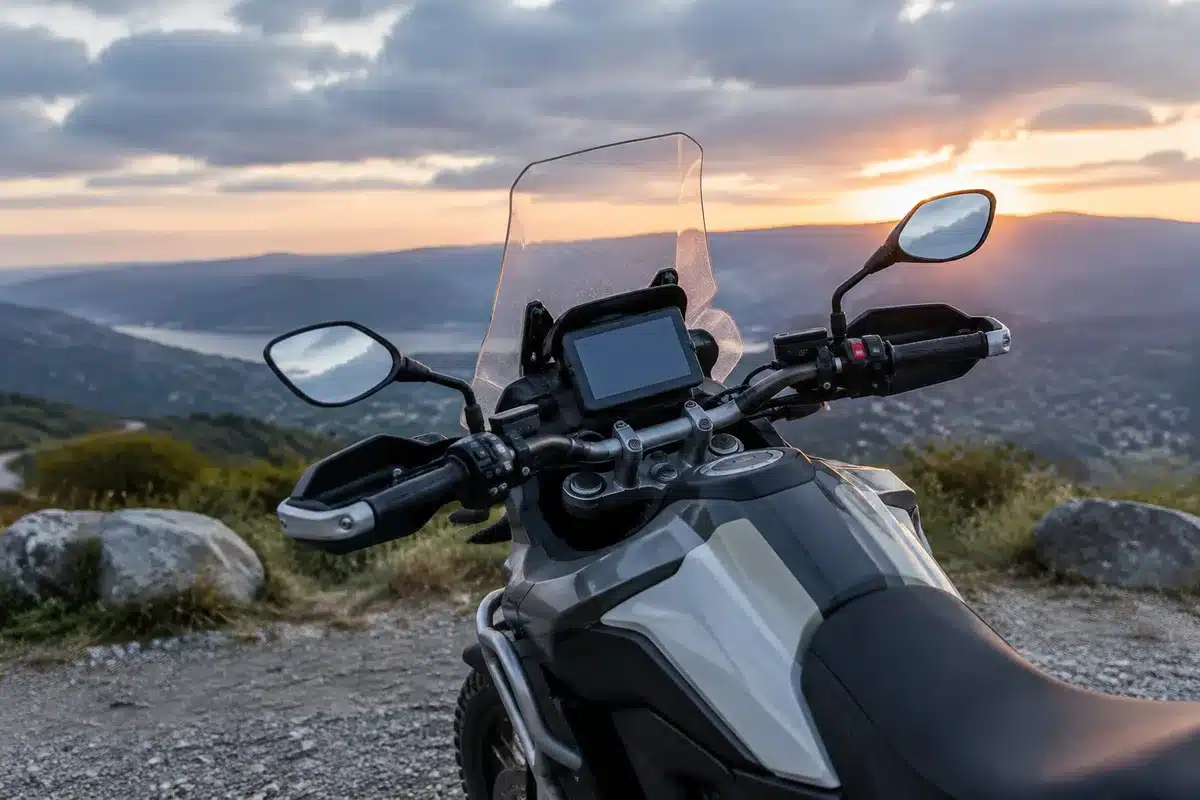
The cockpit features a 4-inch TFT display with a Tripper navigation feature that pairs with a phone app to show maps on the dash. The screen is clear and readable in daylight, and the LED head- and taillights put out a useful beam for night runs. That said, the switchgear and menu navigation were described as non-intuitive; getting the Tripper app working proved fiddly in the reviewer’s experience.
Royal Enfield has kept practicality front and center. A tool roll lives under the seat and basic service points are easy to reach. In the review the author removed the tank and accessed the air filter in minutes, underscoring the bike’s claim to be user-serviceable. Royal Enfield recommends routine checks and a service interval around every 6,000 miles.
Comfort and rider impressions
Ergonomics were generally praised: upright riding position, easy reach to controls and a well-balanced chassis make the Himalayan 450 approachable for a wide range of riders. The new rally seat divides opinion — it’s narrower and firmer than the standard two-piece seat. Some testers found it too firm for long days in the saddle; others felt it was acceptable for the bike’s intended use.
Kerb weight is listed at 196 kg; Royal Enfield notes that claim includes items such as the centre stand, which can make the bike feel lighter in real-world handling. The Himalayan feels manageable on loose surfaces and tight lanes, and performs well for urban commuting and exploratory touring.
Price, options and where it fits
The review references a price point around £6,400 for the Mana Black, though a specification table in the same piece lists £6,599. Royal Enfield also offers tubeless wheels on the standard Himalayan 450 from roughly £6,250, meaning the tubeless option alone can be had for less than the Mana Black package.
At its price the Mana Black is positioned as a midweight, value-driven adventure machine. It’s not meant to be a high-spec long-distance touring bike or a full competition rally machine, but it is rugged, simple to maintain, and capable on a variety of surfaces.
Who should consider it?
The Himalayan 450 Mana Black suits riders who want a durable, usable adventure bike that’s easy to service and forgiving off the beaten track. It’s well suited to daily commuting, light touring on narrow, poor-surface roads, and casual green-laning — with the caveat that owners who plan serious off-road abuse might want to upgrade tyres and bash plate.
| Price (review) | Review cites ~£6,400; spec table lists £6,599 |
| Engine | 452cc liquid-cooled single, DOHC |
| Power | 40 bhp @ 8,000 rpm |
| Torque | 29.5 lb-ft @ 5,500 rpm |
| Seat height | 860 mm (Mana Black rally seat) |
| Fuel capacity | 17 litres |
| Kerb weight | 196 kg |
| Tyres | Front: 90/90 21-inch • Rear: 140/80 17-inch |
| Brakes | Front: 320 mm disc (double-piston ByBre) Rear: 270 mm disc (single-piston ByBre) |
| Suspension | Front: 43 mm USD fork • Rear: linkage mono-shock, adjustable preload (≈200 mm travel) |