Show summary Hide summary
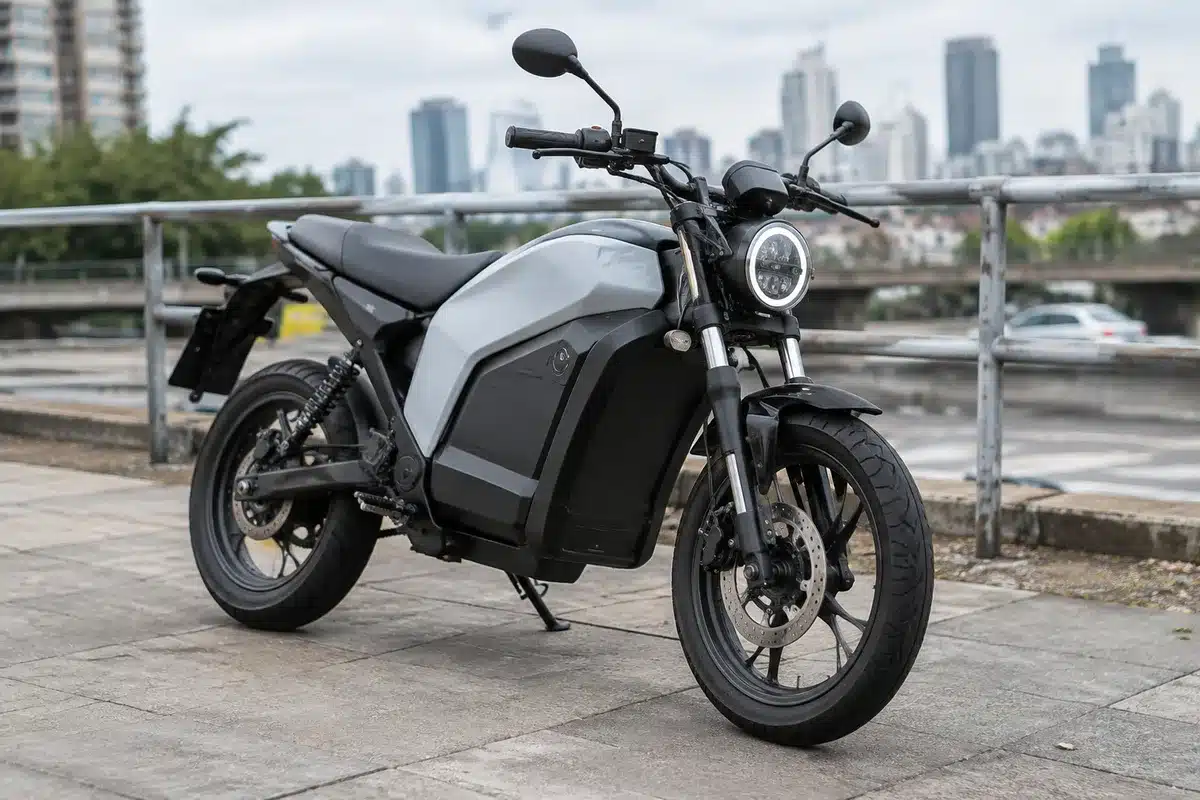
Royal Enfield’s Flying Flea C6 brings the brand’s lightweight electric machine to European streets with a clear brief: a zero‑petrol commuter that can also escape the city when needed. Priced at £5,300, the C6 mixes compact dimensions with unexpectedly dynamic behavior and a technology package aimed at modern urban riders.
Small package, lively performance
At 124 kg and driven by a 15.4 kW electric motor (about 20.7 bhp) that delivers 60 Nm (44.3 lb‑ft) of torque, the C6 is built to feel light and responsive. That instant electric torque makes acceleration feel immediate rather than gradual, and the bike carries speed through corners without feeling strained.
Its 19‑inch wheels and a thoughtfully tuned suspension setup give the C6 a nimble character on tight streets and pleasing composure on twisty roads. On a mixed ride through urban cobbles, suburban two‑lanes and a stretch of highway, the bike showed it can be entertaining beyond short commutes.
Braking and cornering character
Braking is firm and direct. Royal Enfield specifies a ByBre brake system; paired with the bike’s low mass and active regenerative braking, the rear calliper can feel sharp at first. That bite becomes familiar after a few rides, but it is noticeable on initial use.
Regenerative braking—controlled from the throttle
One of the C6’s more distinctive features is how regenerative braking is applied. Instead of a lever or a mode switch, the rider twists the throttle backward against its stop. A light backward twist produces gentle regen and allows the bike to coast. Twist back further and the motor’s resistance increases, letting you slow the bike substantially without using the mechanical brakes.

This method functions as an additional braking tool that’s useful for following traffic, fine‑tuning a line in a corner, or rolling up to junctions. There is a small, momentary mechanical‑feedback sensation in the brake lever when switching between regen and the conventional brakes, a byproduct of the systems coordinating with ABS and each other. It’s not dangerous, just unfamiliar until you adapt.
Range, charging and practicality
Official figures place the C6 at 104 km (about 64.6 miles) on the WMTC urban test and 81 km (about 50.9 miles) on the extra‑urban cycle. In real‑world use, those numbers aligned with what the reviewer saw across mixed riding, though actual mileage will vary with speed, riding style and temperature.
Charging uses an onboard charger and the supplied electronically locked C13/C14 cable, accepting 100–270 V AC at up to 16 A. Royal Enfield claims a 20–80% charge in roughly 65 minutes—approximately one kilometre of range per minute—which makes occasional top‑ups convenient without demanding a dedicated fast‑charging station. The trade‑off: the battery is fixed to the bike and not removable, so charging away from your own parking spot requires placing the C6 within the length of the supplied extension lead.
Living with the C6 day to day
The cockpit includes a 3.5‑inch color TFT, a 15 W wireless phone charger, an electronic handlebar lock and a “Share My Status and Location” function that can send position updates and a tip‑over alert to a nominated contact. These features give the bike a modern, connected feel.
That said, some of the switchgear choices are less intuitive. Buttons sit relatively flush to the housing, and the mode selector is built into a rotating collar on the left grip. That approach works, but it also makes it possible to change ride modes accidentally—reaching for an indicator could nudge you from a conservative setting into a sharper one.
Ergonomically the C6 is compact. The seat is heavily sculpted and the reach to the bars is short. For many riders this supports agile control, but on longer trips the tight seating geometry and sculpted cushion can become uncomfortable unless your body aligns well with the seat’s contours. Royal Enfield does offer a more generous comfort seat as an option.
Engineering details and build quality
The C6’s chassis speaks to a serious engineering effort: a Girder‑linkage front suspension with about 100 mm of travel, a hydraulic twin arrangement at the front and a direct‑acting rear monoshock with an internal floating piston and 110 mm of travel. The result is a package that feels robust rather than cheap.
Electronics are comprehensive for the class: lean‑angle sensitive ABS, traction control, three ABS sensitivity settings and a switchable rear ABS mode. Build quality impressed too—panels and fittings sat solidly, with no obvious rattles or flex, lending the bike a more premium feel than its price might suggest.
Another practical advantage is Royal Enfield’s existing dealer network. Unlike smaller EV startups that are still building service infrastructure, the C6 benefits from an established support system for sales, maintenance and warranty work across multiple markets.
Who the C6 will suit
The Flying Flea C6 targets urban riders who want an electric machine that’s light, stylish and capable of occasional longer runs. It’s not a long‑distance tourer, but its motorway pace—about 114 km/h (71 mph) top speed—means you can leave the city without feeling trapped.
At £5,300 the C6 isn’t the cheapest option in the small electric segment, but it competes well when you weigh performance, build quality and dealer support. For riders comparing options from the likes of Maeving, Super Soco or VMoto, the Flying Flea is a model worth sampling to judge whether its mix of dynamics and technology fits their daily needs.