Show summary Hide summary
Honda has added its new electronic clutch system to the CB750 Hornet, creating a version that lets riders shift without using the left-hand lever. A recent test ride in Portugal shows how the option changes the riding experience while adding only modest weight and cost.
From a familiar nameplate
The Hornet badge dates back to the late 1990s and returned in 2023 as a 755cc parallel‑twin that quickly found buyers. Honda says the modern model has shifted more than 42,000 units across Europe and regularly sits among the top three best-selling mid‑size naked bikes.
A 4K tri-laser projector for close-to-wall use delivers high brightness and quick response
A day that altered the course of events
Mechanically the 2026 CB750 remains close to that original reboot. The headline change this year is the addition of Honda’s E‑Clutch, an optional system that removes the need to operate the clutch lever during normal riding.
How the E‑Clutch works
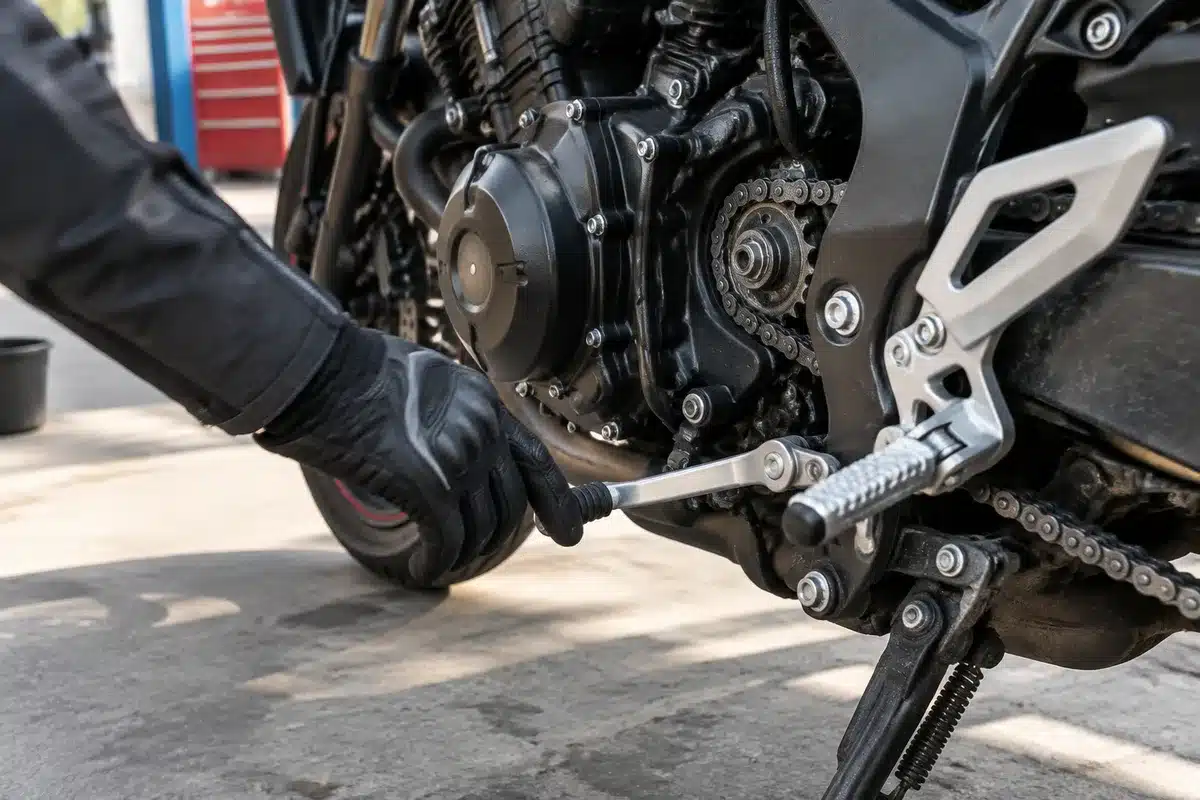
Think of the E‑Clutch as an advanced clutch actuator rather than a fully automatic gearbox. Riders still select gears with the toe‑heel lever and can use the clutch lever whenever they want, but the system handles the clutch action electronically.
The mechanism lives in a compact housing on the right side of the engine. Inside are two small motors and a set of sprockets that coordinate with the bike’s electronics to engage and disengage the clutch. Fitting E‑Clutch increases the Hornet’s wet weight by about 4 kg (to 196 kg) and adds roughly £100 to the base price, bringing the starting figure to around £7,549.
What it feels like on the road
In practice the system delivers very smooth, predictable shifts. Unlike many quickshifters, the E‑Clutch works across the rev range, so there is no need to hunt for a narrow sweet spot. Upshifts and downshifts happen without the kick or jolt that can unsettle the chassis.

That reliability shines in everyday scenarios: imperfect downshifts into corners are softened, and standing starts at lights become less fiddly—you can hold first gear without feathering the clutch or stalling. The left hand is free for other tasks, such as lowering a visor while rolling away.
It isn’t flawless for every situation. On two‑up runs, an experienced rider’s subtle clutch control might still produce a marginally smoother transition than the E‑Clutch in some circumstances.
Engine, chassis and electronics
The Hornet’s 755cc liquid‑cooled parallel twin uses a 270‑degree crank and is rated at 90.5 bhp with 55.3 lb‑ft of torque. The engine’s delivery feels punchy and linear, with a character closer to a V‑twin than the spec sheet alone suggests.
Rider aids include five modes—Sport, Standard, Rain and two user‑configurable settings—that alter power, engine braking and traction control. The user modes allow traction control to be switched off, although the system returns to its default state when the ignition is next turned on.
Chassis setup favours confidence and agility. The Hornet is easy to flick from side to side without feeling nervous. A 41 mm Showa fork up front is non‑adjustable, while the rear shock offers seven stages of preload. Braking is handled by radial‑mount Nissin calipers; they deliver competent performance for road use, though very aggressive riders might wish for a touch more initial bite.
Design, ergonomics and service notes
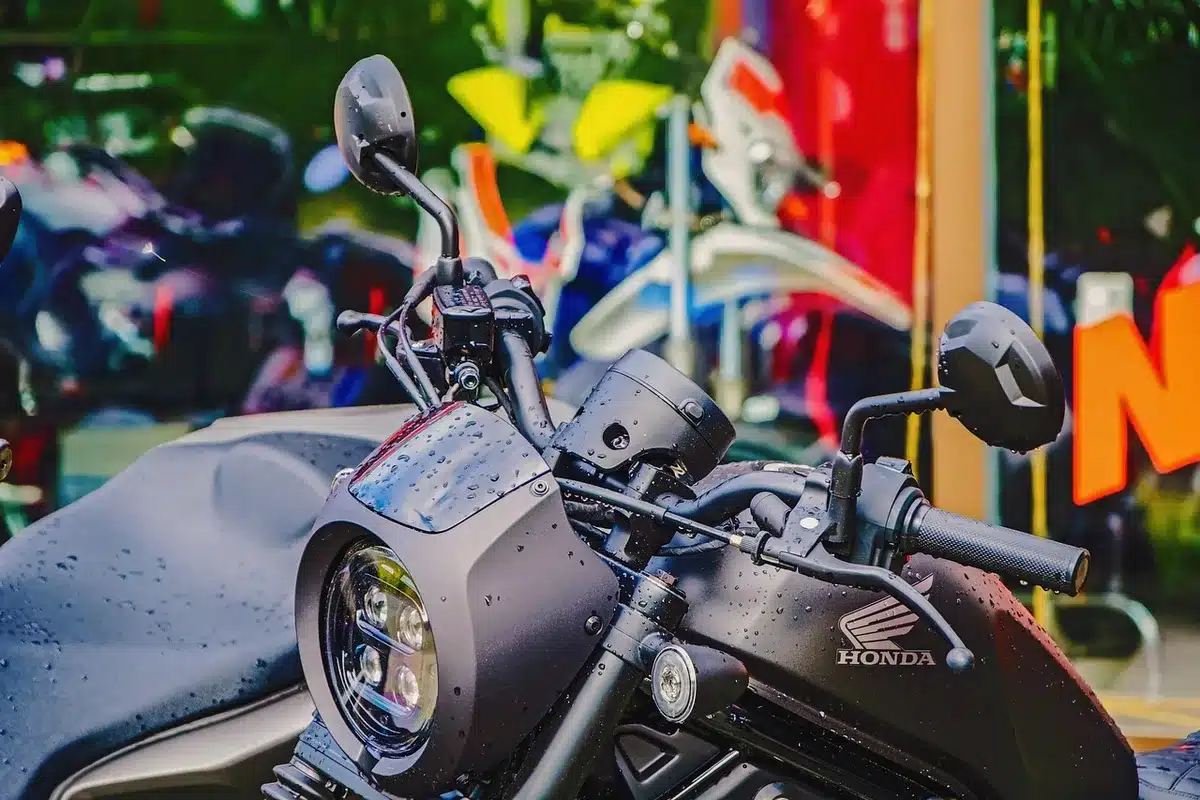
Styling has seen only modest updates since the 2023 relaunch, including a revised headlight surround. Visual taste is subjective—the bike did not thrill every rider, though some liveries such as Goldfinch Yellow and the Design Pack improve its presence.
Build quality is high and the seating position is comfortable. The seat height is listed at 795 mm, and the 5‑inch TFT is unobtrusive in the lower field of view. One practical gripe is the mirror placement, which keeps the glass close together and limits rearward visibility.
Honda still provides a traditional tool roll under the seat, a convenience many owners appreciate. At the same time, the E‑Clutch adds moving parts—motors and sprockets—that could complicate clutch maintenance for home mechanics down the line.
Where it sits among rivals
The Hornet competes in a crowded mid‑weight naked segment. It undercuts several rivals on price while offering a touch more power and a unique transmission option.
| Model | Engine | Output | Starting price |
|---|---|---|---|
| Honda CB750 Hornet E‑Clutch | 755cc parallel twin | 90.5 bhp / 55.3 lb‑ft | £7,549 |
| Aprilia Tuono 660 | 660cc parallel twin | 105 bhp / 51.6 lb‑ft | £11,495 |
| CFMoto 800 NK | 799cc parallel twin | 94 bhp / 59.7 lb‑ft | £5,999 |
| Kawasaki Z650 S | 649cc parallel twin | 67.3 bhp / 47.2 lb‑ft | £7,199 |
| KTM Duke 790 | 799cc parallel twin | 94 bhp / 59.7 lb‑ft | £7,999 |
| QJMotor SRK 800 | 778cc parallel twin | 95 bhp / 55.3 lb‑ft | £6,699 |
| Suzuki GSX‑8S | 776cc parallel twin | 82 bhp / 57.5 lb‑ft | £7,999 |
| Triumph Trident 660 | 660cc triple | 81 bhp / 47 lb‑ft | £8,095 |
| Yamaha MT‑07 w/ Y‑AMT | 689cc parallel twin | 73.4 bhp / 50.1 lb‑ft | £7,854 |
Who it suits
If you want a mid‑weight naked that is easy to live with and rewarding to ride, the Hornet with E‑Clutch is worth a look. The system removes one operational chore without dulling engagement. For riders who value simplicity, confidence and everyday usability, it’s a meaningful option.
Key specifications
| Engine | 755cc liquid‑cooled parallel twin with 270° crank |
| Transmission | Six‑speed with E‑Clutch |
| Power | 90.5 bhp @ 9,500 rpm |
| Torque | 55.3 lb‑ft @ 7,250 rpm |
| Top speed | 127 mph |
| Seat height | 795 mm |
| Ground clearance | 140 mm |
| Wet weight | 196 kg |
| Fuel capacity | 15.2 litres |
| Front tyre | 120/70 R17 |
| Rear tyre | 160/60 R17 |
| Front brakes | Radial four‑piston Nissin calipers, 296 mm floating double discs |
| Rear brake | Single‑piston caliper, 240 mm disc |
| Front suspension | Showa 41 mm SFF‑BP USD, 130 mm travel |
| Rear suspension | Monoshock, Prolink swingarm, 150 mm travel |