Show summary Hide summary
With fuel prices still a concern for many riders, Honda has launched a full‑size electric naked bike aimed at offering a familiar motorcycling feel without petrol. The 2026 WN7 blends compact packaging, brisk electric torque and a surprisingly conventional riding stance — but it brings trade‑offs in range, price and a few curious design choices.
From concept to production
Honda’s WN7 is not the industry’s first large electric motorcycle, but it marks the company’s most visible entry into full‑size EV two‑wheelers. The model evolved from the EV FUN Concept shown at EICMA in 2024 and reached production largely intact a year later.
AHRMA announces prize money for Open Two-Stroke class at Barber Vintage Festival
Sony unveils $5,900 Walkman for audiophiles
The name hints at Honda’s intention: the “W” evokes wind and a sense of openness, while the “N” denotes a naked ride. The numeric “7” positions the WN7 within Honda’s internal power classes. With a peak output of 67 bhp and 73.8 lb‑ft of torque, the bike sits between smaller and larger Hornets in Honda’s lineup but commands the highest price among the brand’s naked models.
Packaging and design
Where the WN7 stands out is in its simplicity. Without a traditional tubular frame, the bike is essentially components mounted around a central battery pack. That approach keeps the profile unusually narrow — just 826mm including mirrors — and gives designers more freedom.
The battery sits mostly exposed and is flanked by large intake shapes. The electric motor is liquid‑cooled and tucked behind the battery. Because the electric drivetrain is compact, overall width is determined mainly by battery size rather than engine bulk. The result is a bike that slips through traffic with ease despite weighing 217.5 kg.
Some visible compromises were made to fit components into the slim package. Honda uses a belt drive to reduce mechanical noise, but that arrangement constrains swingarm clearance and led to a relatively narrow rear tyre: 150/60 R17. Visually it looks small for a machine with the WN7’s performance figures, though Honda’s engineering team says it does not harm handling.
Controls, ergonomics and fit
Seat height is 800 mm. The saddle feels firm; reactions among riders varied, with some testers finding it too taut and others deeming it acceptable for the bike’s intended short‑range use. Footpegs sit slightly rearward, while the handlebars fall naturally to the hands.
A 5‑inch TFT instrument panel supplies the necessary information and remains readable in bright light, although the angle is fixed. Build quality and finish are strong for an electric motorcycle in this class.
Power delivery and braking
Electric licensing rules make the WN7 A2 compliant despite the 67 bhp peak number because EV regulations use continuous power rather than peak output. On the road, the bike’s instant torque is the headline: acceleration is immediate and linear, with the kind of shove riders expect from an electric motor.
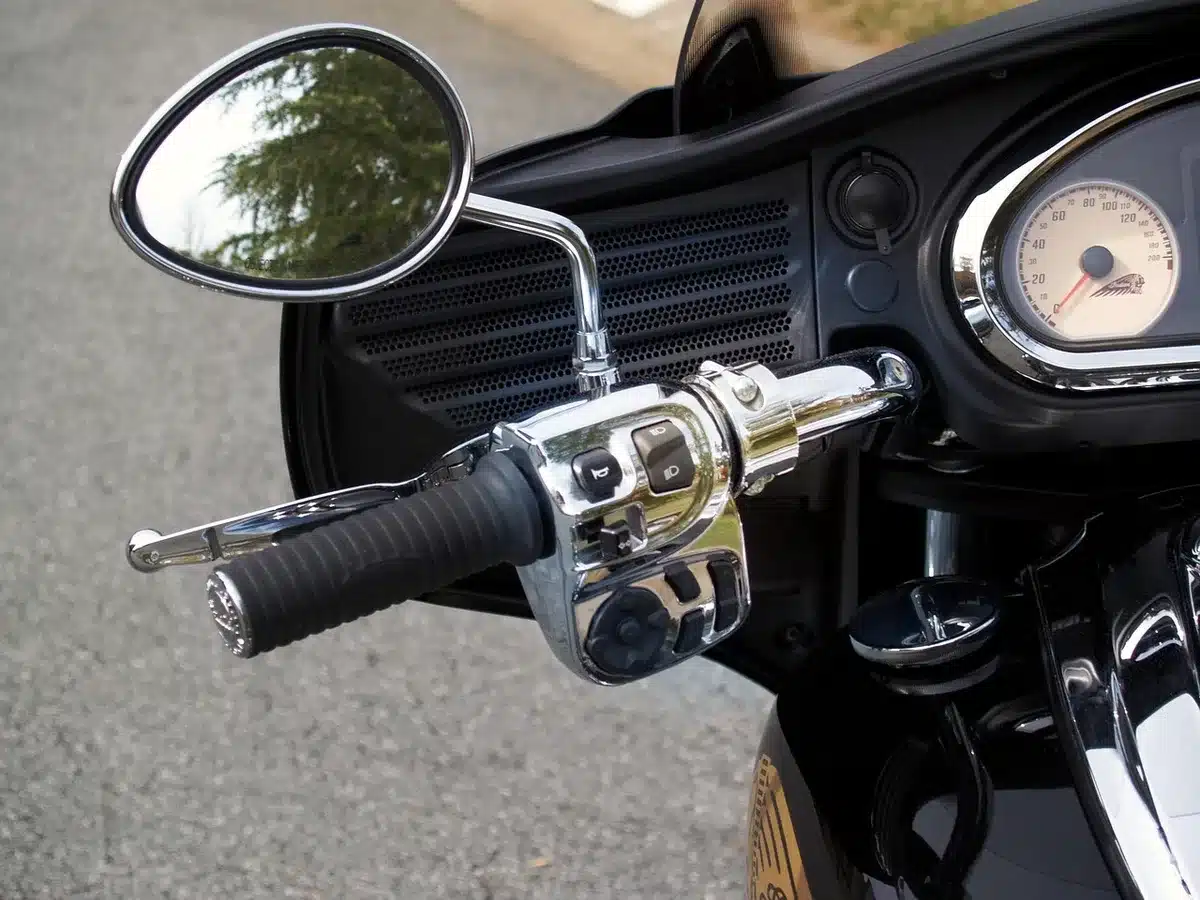
There is no gearbox or clutch, and Honda provides four ride modes — Sport, Standard, Econ and Rain — that change throttle response, traction control, regen strength and deceleration feel. Regenerative braking can be adjusted between 0 and 3 from the left grip. At the highest setting it simulates strong engine braking; the bike’s brake light illuminates when regen is active to alert following traffic.
Physical brakes are competent for a middleweight naked: strong, well‑modulated and confidence‑inspiring when the situation demands it.
Electrics and convenience features
The WN7 includes several modern amenities: keyless start, full LED lighting, a USB‑C outlet, a speed limiter and an Emergency Stop Signal. Phone connectivity is available through Honda’s RoadSync app, but there is no WN7‑specific app or remote battery monitoring.
For low‑speed manoeuvring the bike has a Walking Speed Mode (WSM) with forward and reverse functions limited to 5 km/h. However, the WN7 lacks a dedicated parking brake; without a transmission to leave in gear, riders must be cautious when parking on slopes.
Charging and range realities
Honda quotes a WMTC range of 87 miles (140 km), but the manufacturer and testers both caution that real‑world use pushes practical range closer to around 60 miles under enthusiastic riding. That limits the bike’s suitability for long tours.
Charging options include a standard household plug — a slow route taking more than six hours — and a CCS2 fast‑charging inlet. Honda says recovering from 20% to 80% on a commercial CCS2 charger takes roughly 30 minutes, a time frame that fits a café stop or lunch if you plan breaks into your ride.
How it feels on the road
Riding the WN7 emphasizes a quieter, more sensory connection to the ride. Without engine noise or heat intrusion, ambient sounds and the sense of movement come forward. The throttle is playful in Sport mode, and the bike’s composure through corners is aided by its low centre of gravity.
Project Manager Masatsugu Tanaka demonstrated the simple controls and toggles, including traction control settings. The WN7’s instantaneous torque and smooth delivery were repeatedly singled out as a highlight by testers.
Market position and rivals
Priced at £12,999, the WN7 is notably more expensive than Honda’s internal combustion CB1000 Hornet SP (about £2,900 less) but is competitive among full‑size electric alternatives. The wider EV market is patchy: some rivals are expensive or out of business, and dealers remain limited for several brands.
Examples cited include a Zero SR/F with rapid charger priced much higher, a Can‑Am Origin that lacks quick‑charging, and LiveWire’s S2 Del Mar, which undercuts the WN7 on price but comes from a brand with uncertain sales. Honda’s scale is an advantage: the company sells millions of motorcycles annually and plans dealer support for the WN7 across its UK network.
Key specifications
| MOTOR | 18 kW |
| PEAK POWER | 67 bhp |
| TORQUE | 73.8 lb‑ft |
| TOP SPEED (limited) | 80 mph |
| RANGE (WMTC) | 87 miles (140 km) |
| WEIGHT | 217.5 kg |
| SEAT HEIGHT | 800 mm |
| FRONT TYRE | 120/70 R17 |
| REAR TYRE | 150/60 R17 |
| FRONT SUSPENSION | 43mm USD forks, 120mm travel (non‑adjustable) |
| REAR SUSPENSION | 41mm monoshock, 120mm travel, preload adjustable |
| FRONT BRAKES | Dual 296mm discs, two‑piston calipers |
| REAR BRAKE | Single 256mm disc, single‑piston caliper |