Show summary Hide summary
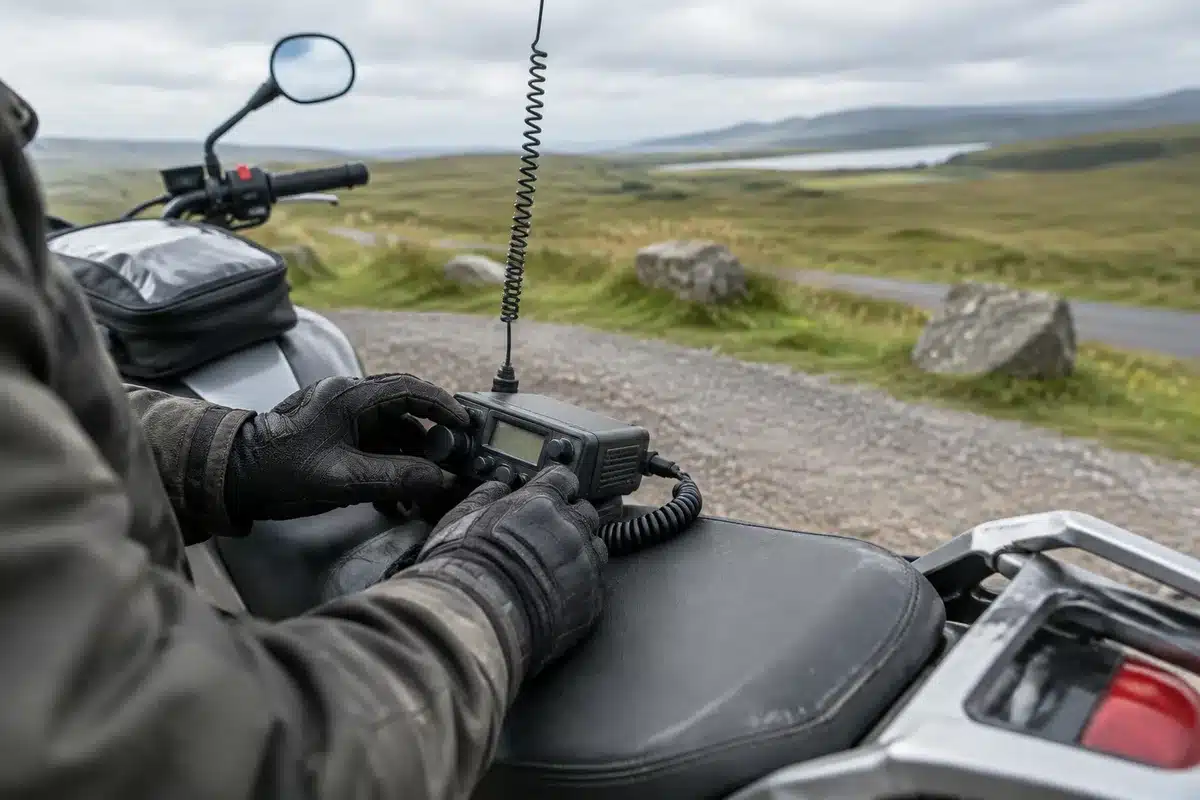
“Ham and Moto” describes a simple idea: motorcycle riders who carry a portable ham radio and use it to reach fellow amateur operators, sometimes across continents. The practice blends travel and radio communication, letting riders pause on the roadside or at a campsite and speak with people beyond typical short-range devices.
How the hobby works
At its core is amateur radio, a licensed service that allows two-way voice, data, and sometimes digital communications on internationally allocated frequencies. Unlike consumer walkie-talkies used around a campground, such as FRS devices, ham radios can transmit over much greater distances when conditions and equipment allow.

Riders who adopt the “Ham and Moto” approach typically install or carry a compact radio and antenna suited for mobile operation. They can set up quickly, check band conditions, and call CQ to find other operators. The result is a form of travel that doubles as a portable communications station.
Roots and reach
Amateur radio traces its organized beginnings to the early 20th century, with activity recorded since 1914. Since then the community has grown into a global network of licensed operators.
Today there are roughly three million people with amateur radio licenses worldwide. About one quarter of them hold licenses in the United States, reflecting a substantial domestic presence within the hobby.
Why some riders take it up
For many enthusiasts, the appeal is straightforward: it adds a social and technical dimension to motorcycle travel. Setting up a portable station turns a rest stop into a moment for exchange—about signal reports, locations, or simply friendly conversation with operators elsewhere.

The activity also attracts people who enjoy hands-on radio work. Portable operation invites experimentation with antennas, power setups, and compact transceivers, all adapted to life on the road.
Terms to know
A few short definitions help newcomers understand the scene.
- Amateur radio: Licensed two-way radio service on internationally allocated frequencies.
- Mobile operation: Using radio equipment while in motion or temporarily set up away from a fixed station.
- FRS: A common consumer short-range radio service, useful locally but not comparable in range to ham frequencies.