Show summary Hide summary
Italjet has unveiled the Dragster 700 Twin, a two-wheeled machine that deliberately blurs the line between scooter and motorcycle. The company revealed the model at Imola, but attendees were given only a brief ride — leaving many questions about how the unusual package performs in everyday use.
A compact Italian story
Founded in Bologna in 1959 by racer Leopoldo Tartarini, Italjet remains a family-run brand under his son, Massimo. The company is best known for scooters and small-displacement bikes, although its production footprint now spans Italy, China, Thailand and Malaysia.
Italjet has long experimented with bold styling. The Dragster family began in 1998 and has evolved into a sharply styled line that emphasizes exposed structure, minimal bodywork and modern lighting. The new 700 Twin represents the range-topping iteration.
Where scooter styling meets motorcycle mechanics
The Dragster 700 Twin borrows the dramatic silhouette of its smaller siblings but grows considerably in scale. Its wheelbase measures 1,553 mm, a span comparable to mid-size adventure bikes.

The powerplant is a liquid-cooled, parallel-twin displacing 692cc, the same unit used in the Benelli TRK 702 and produced within the Qianjiang group. Italjet cites peak output of 68.3 bhp and torque of 51.6 lb-ft, with a claimed top speed near 190 km/h (about 118 mph). An A2-compliant variant will also be offered.
Chassis, brakes and electronics
The Dragster rides on 15‑inch wheels and uses a six-speed gearbox rather than a scooter-style CVT, and it lacks underseat storage. Rubber is Pirelli Corsa, sized 120/70‑R15 up front and 160/60‑R15 at the rear.
Stopping power comes from twin 270 mm front discs gripped by four‑piston Brembo calipers and a 260 mm rear disc. ABS and traction control are standard and selectable.
Suspension and ergonomics
Suspension features upside-down Marzocchi forks up front and a rear monoshock with preload adjustment. Italjet also fits a patented system that lets the rider alter spring stiffness, operated by an external metal lever on the bike’s right side.

Wet weight is quoted at 190 kg and seat height at 815 mm. A clear 5‑inch TFT display provides connectivity and comprehensive ride information. Twin Akrapovič silencers tucked beneath the seat add a pronounced exhaust note.
The Imola launch and first impressions
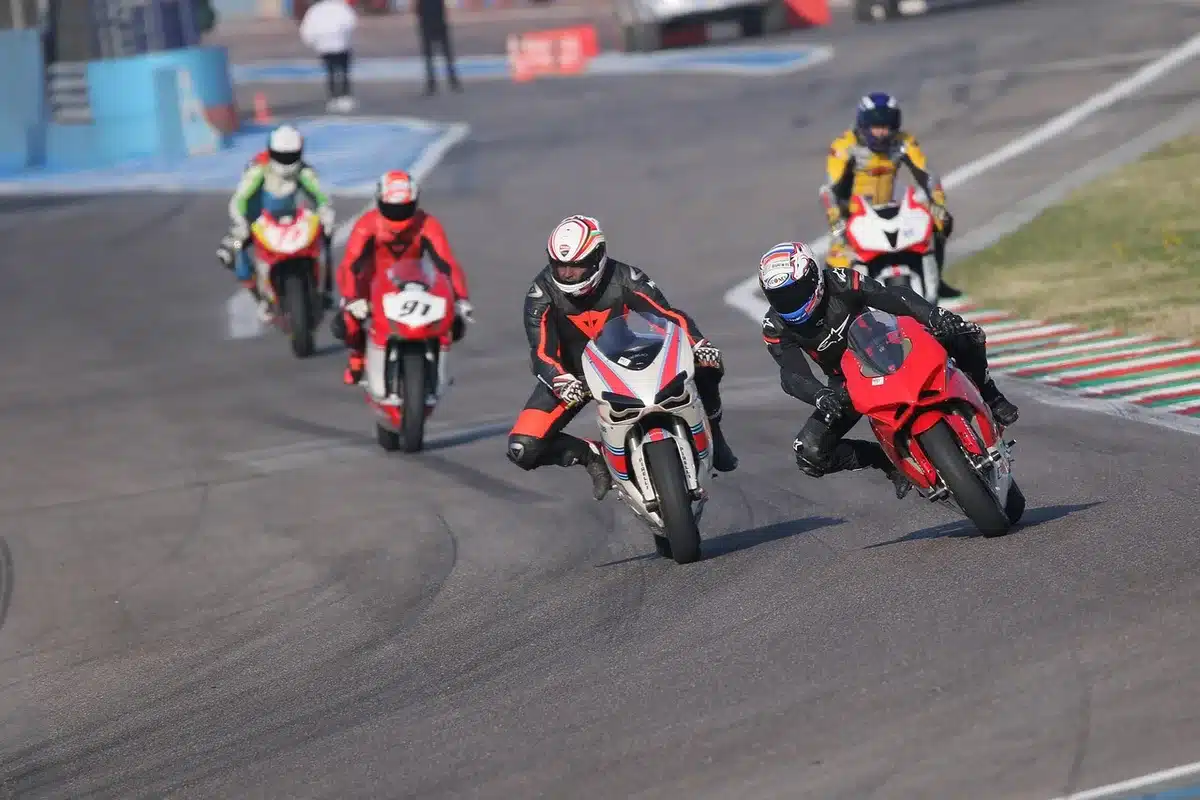
Italjet chose the historic Autodromo Enzo e Dino Ferrari for the Dragster’s public debut. The presentation leaned into heritage and emotion, delivered primarily in Italian and stressing the brand’s roots.
Press riders at the event were limited to three short laps around Imola — roughly six minutes on track. That curtailed any in-depth evaluation. Still, journalists on site noted the bike’s distinct character, strong exhaust tone and an overall sense of quality in fit and finish.
On-track notes
The short session included tight technical sections such as the Variante Alta chicane, where the unfamiliar layout and brief run time made firm conclusions difficult. Italjet representatives described the engine as “proven” and suitable for this application.
The launch team suggested the Dragster’s real appeal is its uniqueness. “We’re happy to let the rider decide” whether to call it a scooter or a motorcycle, said Italjet’s global marketing manager, Bobby Beck. He added that Italjet is targeting a niche audience rather than mass-market buyers.
Availability and pricing
Italjet currently has no appointed distributor in the United Kingdom. The company says it is in talks with potential partners and, if no agreement is reached by early November, plans are in place to sell directly to customers.
European pricing starts at €13,990, roughly equivalent to £12,130. That positions the Dragster toward the premium end of its segment.
- Pros: genuinely unique design, strong-sounding exhaust, high-quality components
- Cons: limited evaluation opportunity at launch, limited availability in some markets, premium price